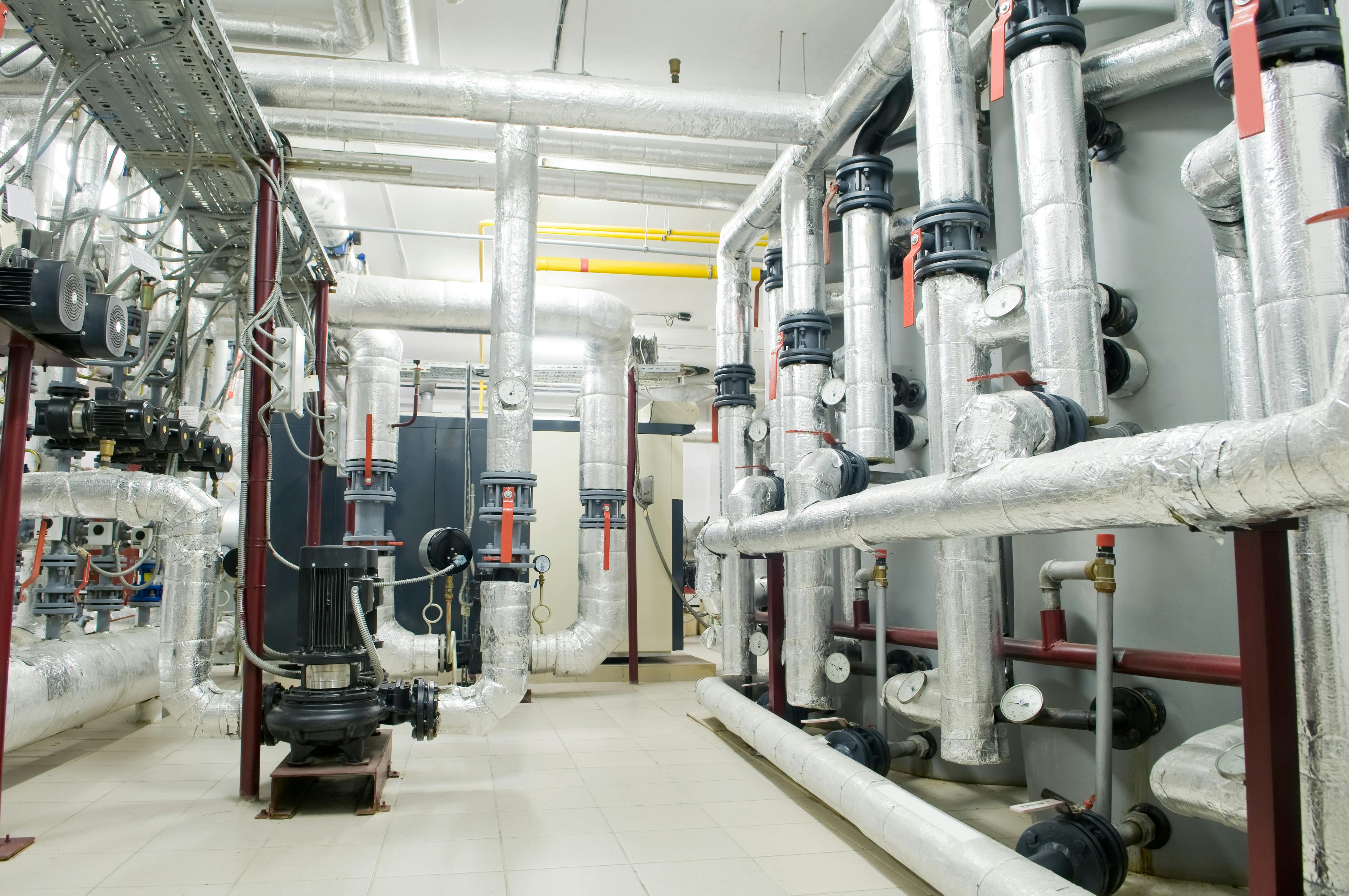
hvac, header, application

Heating, Ventilation and Air Conditioning (HVAC) systems play an important role in providing thermal comfort and maintaining a comfortable living environment in all types of buildings.

For this reason, HVAC & building services insulation is designed to enhance energy efficiency, reduce noise levels and ensure fire resilience.

ROCKWOOL's HVAC insulation products are versatile and suitable for a wide range of applications in commercial, residential, and industrial settings, including high-rise offices, apartments, hospitals, warehouses, and airports.

From ventilation duct insulation and voids and fire sealants to fire rated ductwork and pipe insulation and lagging, ROCKWOOL’s HVAC insulation products are versatile and suitable for a wide range of applications in commercial, residential, and industrial settings. Our products are designed to ensure a comfortable and healthy living environment, while also helping you save energy and reduce costs.

Read on to learn more about ROCKWOOL’s HVAC insulation products and the expertise, support and resources we offer to our customers.

Guide to BS 5422:2023

BS 5422 provides up-to-date specification guidance for the thermal insulation of HVAC applications in domestic, non-domestic and commercial buildings. 

This guide from ROCKWOOL helps specifiers to understand the changes in guidance noted in BS 5422:2023 to achieve economic and CO2 savings in building projects. 

The Guide to BS 5422:2023 also contains updated thickness tables to support specifiers in selecting the right insulation for HVAC systems.

To understand the full effect of these changes on official standards, download the guide for free today.

Guide to BS 5422:2023 -  Web thumbnail

HVAC products

The benefits of HVAC insulation

Insulating HVAC systems is a great way to improve efficiency, reduce carbon emissions, and cut operating costs. It keeps indoor temperatures stable and helps to create a comfortable living environment for workers and occupants with minimum energy consumption. It also has other benefits including:

  • Energy efficiency - To improve building energy efficiency and reduce repair costs associated with older systems, it's essential to insulate HVAC systems and upgrade to energy efficient units. 
  • Acoustic performance - HVAC systems in large buildings can increase indoor noise levels, so insulating these systems effectively can also improve the overall acoustic performance - reducing disturbance from unwanted noise
  • Fire safety and protection – HVAC insulation made from non-combustible stone wool lowers the risk of fire in buildings, providing extra safety and protection
  • Compliance and application - HVAC insulation is suitable for use in new buildings and renovations. It ensures that installers are compliant with the relevant building regulations and standards.

Building regulations for HVAC insulation

BS 5422:2023 guides designers, specifiers, contractors, and manufacturers of thermal insulation, helping them determine the minimum insulation thickness required to control and reduce heat loss and gains from building services. It also covers the importance of insulating pipes and ductwork to maintain the integrity of compartmentation in fire stopping.

This standard was updated in 2023 and will tighten further in 2025 with the Future Homes Standard

With regulations and guidance evolving, architects and specifiers face a challenge to ensure full compliance and construct buildings that withstand the test of time.

However, we’re here to help and support you with thoroughly tested products, CPD learning modules and advice from our team of experts to help you specify the right product to comply with the regulations, as and when they change.

Find out more:

Sector specific HVAC regulations

Schools

To ensure a healthy learning environment, it's important for schools to maintain indoor temperatures between 18°C and 32°C and adjust them according to activity levels. Additionally, schools should adhere to standards such as BB93 for acoustic design and the EFA daylight design guide for lighting. By following these guidelines, schools can create an optimal environment for students to learn and grow.

Young schoolboy hard at work in the classroom; Shutterstock ID 310987667; Used for Sustainability Report 2018.
academic; book; boy; child; class; classroom; concentration; education; kid; learning; pupil; reading; school; schoolboy; schoolkid; sitting; stress; stressed; student; study; studying; table; work; worry;

High-rise buildings

Following the Grenfell Tower fire, fire safety in high-rise buildings has become a top priority. HVAC systems must adhere to fire safety regulations to reduce fire risks. This can involve using fire-resistant ductwork materials or incorporating smoke dampers.

In high-rises, HVAC systems face stricter requirements than in lower buildings. This would mean implementing zone control for better temperature regulation across floors, integrating smoke control systems for emergencies, and prioritising energy-efficient options like heat pumps for sustainability.

high rise,

Hospitals & healthcare

The Health Technical Memorandum 03-01 (HTM 03-01), published by NHS England, is the key reference for designing, validating, operating, and maintaining specialised ventilation systems in healthcare facilities.

While it primarily focuses on new installations and major refurbishments, it is considered the standard to strive for in all hospitals.

HTM 03-01 advocates for natural ventilation and mixed-mode ventilation, with mechanical ventilation as a last resort. It sets specific air change rates for different areas within hospitals, with high-risk zones like operating rooms requiring more frequent air changes to minimize airborne contaminants.

The memorandum also addresses pressure control strategies, such as positive or negative pressure, in specific rooms to regulate airflow and prevent cross-contamination.

UK, Cambridge, HOK, Healthcare, Rockfon MediCare Standard, A edge, 600x600, white

Leisure centres

To ensure leisure centres offer optimal comfort and air quality, it's crucial to follow industry guidance and best practices. Although there isn't a single standard, various resources provide helpful recommendations.

The Chartered Institution of Building Services Engineers (CIBSE) publishes guides specifically for leisure centres, suggesting ideal temperature and humidity levels for different areas like gyms and swimming pools.

The Health and Safety Executive (HSE) regulates workplace safety and offers valuable advice on thermal comfort.

Additionally, Sport England provides insights into managing sports facilities, including ventilation and air quality guidelines similar to CIBSE. By utilising these resources, leisure centres can create pleasant and healthy environments for visitors.

UK, Riverside Leisure Centre, Chelmsford, Pick Everard, Leisure, Rockfon Eclipse, Rockfon Koral, 600x600, 2360x1160x40, White, Restaurant/Pub/Nightclub

Why do we need HVAC insulation?

Insulating HVAC systems improves efficiency, reduces carbon emissions and cuts operating costs. It helps keep indoor temperatures stable with minimum energy consumption – forming a comfortable living and working environment for occupants.  

In addition, heating and cooling systems in large buildings can increase indoor noise levels, so insulating services effectively can also improve the overall acoustic performance - reducing disturbance from unwanted nuisance noise. 

Specifying ROCKWOOL HVAC solutions manufactured from non-combustible stone wool results in reduced fire load in buildings offering additional assurance for fire safety and protection.

HVAC insulation is suitable for use in new buildings and renovations. In the UK it can ensure engineering companies, architects, contractors and installers remain compliant with the relevant building regulations and standards. 

Key benefits of ROCKWOOL applications include:

  • Improved energy efficiency 
  • Reduced noise pollution
  • Fire protection
The UK's current commitment to enhanced environmental targets across the construction sector will focus HVAC solutions to improved energy efficient solutions. ROCKWOOL HVAC solutions are not only designed to improve energy efficiency but incorporate benefits to improve comfort and wellbeing whilst keeping people, buildings and the environment safe for the future

Paul Barrett

ROCKWOOL UK
Head of Product Management

Case studies


The challenge

Aldgate Tower is a brand new, state-of-the-art office development, the first phase of a wider regeneration of the Aldgate area in London. This impressive 317,0000 sq.ft contemporary office block comprises 16 floors of Grade A revolutionary office space designed to achieve environmental efficiency as well as low running costs for operators.

The Aldgate Tower project required ROCKWOOL to meet a range of challenging product performance and service criteria.


The solution

Over 15,000 linear metres of RockLap H&V Pipe Sections, 5,000m2 of Ductwrap plus Fire Duct Systems were specified as a non-combustible HVAC insulation solution.


The results

Excellent communication and a coordinated approach ensured that all products were readily available. Thanks to the UK manufacturing operations of ROCKWOOL, and one of their distributors, SIG Technical Insulation, MEP Solutions and thermal insulation contractor Denco Thermal Ltd, were never short of product with 100% of all delivery targets being met.

Aldgate Tower
ROCKWOOL insulation is strong, but with a degree of flexibility which means it can be fitted neatly around pipework and ductwork without any gaps for optimum performance. It's an excellent, environmentally friendly product, which met all our criteria on this demanding project.

Paul Wittam

Project Manager at Murcury Engineering
To be updated
PDF
13.0 MB

HVAC Systems Guide

To be updated
PDF
6.0 MB

HVAC Specification Guide

To be updated
PDF
1.2 MB

RockLap H&V Pipe Section Packaging Guide

To be updated
PDF
1.4 MB

Thickness of ROCKWOOL Insulation

Download our HVAC Systems Guide

Financial support

Check the Energy Savings Trust website to see whether there are any financial support schemes available for HVAC insulation.

Energy Efficiency, Key, Keyboard, Button

FAQs

What is HVAC?
Why insulate HVAC systems?
Should HVAC ducts be insulated?